
ADCS (Attitude Determination and Control System) is one of the most critical subsystems on a satellite. It determines the spacecraft’s current attitude, calculates required adjustments, and controls onboard actuators to maintain or change the satellite’s orientation.
Attitude Determination
The primary function of ADCS is to determine the spacecraft’s current attitude.
It uses data from attitude sensors to calculate the satellite’s orientation in space and provide accurate attitude information for control operations.
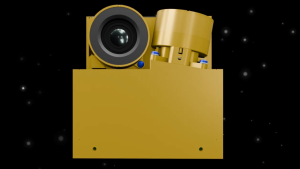
Attitude Control
After determining the satellite’s current attitude, ADCS calculates the difference between the actual attitude and the target attitude.
It then sends commands to actuators to generate corrective torque and adjust the spacecraft’s orientation.
ADCS operates throughout the entire satellite mission lifecycle.
After entering orbit, a satellite may experience unwanted rotation due to launch and deployment disturbances.
ADCS performs detumbling operations to reduce the satellite’s rotation speed.
As a result, the spacecraft reaches a stable condition and prepares for normal mission operations.
During mission operations, ADCS maintains the required spacecraft pointing direction.
It ensures that onboard payloads can perform their tasks accurately and reliably.
When a satellite experiences failures or abnormal conditions, ADCS can place the spacecraft into a safe attitude.
The safe mode usually includes:
Pointing solar panels toward the Sun
Maintaining power supply
Waiting for recovery commands from ground control
Why Is ADCS Important for Satellites?
Almost all satellite missions rely on precise attitude control. For example, ADCS enables Earth observation satellites to accurately point cameras toward target areas, preventing image shifts and quality degradation caused by attitude errors. For scientific satellites, ADCS provides high-stability pointing control to support accurate observations and measurements.
Send us a message,we will answer your email shortly!

TY-Space Technology (Beijing) Ltd. is professional focusing on advanced attitude optical sensors, especially Star Trackers for space industry.