
In a satellite ADCS (Attitude Determination and Control System), both Star Trackers and Gyroscopes are important attitude sensors. They provide spacecraft with critical attitude information and motion data, but they serve different purposes.
A Star Tracker is a high-precision optical attitude sensor that determines spacecraft orientation by observing stars. Since stars provide stable spatial references in space, a star tracker captures star images and compares them with an onboard star catalog to calculate the satellite’s absolute attitude.
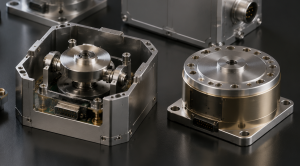
A Gyroscope is an attitude sensor used to measure spacecraft angular velocity and rotational motion.Unlike a star tracker, a gyroscope does not require an external reference (such as stars). Instead, it detects spacecraft motion changes based on inertial measurement principles.
Advantages of Star Trackers
Star trackers can provide one of the highest levels of attitude measurement accuracy available for spacecraft.
Because stars provide fixed references, star trackers do not accumulate measurement errors over time.
A star tracker can directly determine the spacecraft’s current orientation without relying on previous attitude information.
Advantages of Gyroscopes
Gyroscopes provide high-frequency measurement data and can quickly respond to satellite attitude changes.
Gyroscopes do not rely on external references and can operate under any lighting conditions.
Gyroscopes are suitable for:
Why Do Satellites Use Both Star Trackers and Gyroscopes?
Modern ADCS systems usually do not rely on only one type of sensor. Instead, they combine star trackers and gyroscopes to take advantage of their respective strengths.
In modern satellite ADCS systems, star trackers and gyroscopes cannot completely replace each other.
Send us a message,we will answer your email shortly!

TY-Space Technology (Beijing) Ltd. is professional focusing on advanced attitude optical sensors, especially Star Trackers for space industry.