
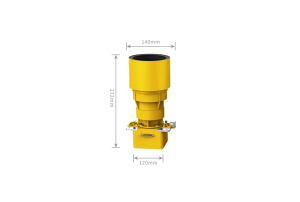
The Star Tracker is a core sensor in the ADCS (Attitude Determination and Control System). In an ADCS, the star trackers mainly performs the task of attitude determination.
How Does a Star Tracker Work in ADCS?
The operation process of a star tracker in an ADCS system usually includes the following steps:
Star Image Acquisition
The star trackers captures stars within its field of view through its optical system.
Star Identification
A star tracker stores a high-precision onboard star catalog. The processor compares the observed star pattern with the star catalog database for matching.
Attitude Calculation
After star identification, the star trackers calculates the satellite attitude through attitude determination algorithms.
Main Limitations of Star Trackers in ADCS
Stray Light Interference
Light from the Sun, Earth reflection, and the Moon may enter the optical system and affect star identification.
Therefore, star trackers usually adopt:
Optical baffle design
Stray light suppression technology
Image processing optimization
to improve resistance to interference.
Temperature Variation Effects
Large temperature changes in the space environment may cause:
Optical-mechanical structure deformation
Optical axis deviation
Calibration errors
High-performance star trackers require strict thermal stability designs.
Why Is a Star Tracker Called the “Eye” of a Satellite?
A satellite has no GPS direction reference or ground landmarks in space. It can only rely on onboard sensors to determine its orientation.
By observing distant stars, star trackers provides the satellite with a stable and accurate space reference.
Send us a message,we will answer your email shortly!

TY-Space Technology (Beijing) Ltd. is professional focusing on advanced attitude optical sensors, especially Star Trackers for space industry.