
Star Tracker and Celestial Navigation are both technologies used in the aerospace field. Although both use celestial objects as references, they perform different functions. A star tracker is mainly used to determine a spacecraft’s attitude, while celestial navigation is mainly used to determine a spacecraft’s position and, in some cases, velocity.
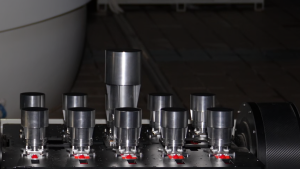
Star Tracker is also known as a star sensor. It is an optical device used for spacecraft attitude determination. By observing stars and using them as stable reference points, it determines the spacecraft’s attitude in three-dimensional space.
Celestial Navigation is a broader navigation technology. It determines a spacecraft’s position, velocity, or flight trajectory by observing celestial objects. The navigation system compares the observed celestial information with positions predicted by astronomical models to estimate the spacecraft’s state.
Simply put, a star tracker can be understood as an attitude sensor, while celestial navigation is better understood as a navigation method or system-level technology.
Star Tracker and Celestial Navigation Are Not the Same Technology
A common misconception is that a star tracker itself is a celestial navigation system. A star tracker measures the angular relationship between a spacecraft and known stars. When used independently, it mainly provides attitude information.
Celestial navigation, however, requires additional information and algorithms to estimate the spacecraft’s position. For example, simply knowing the angle of a particular star relative to the spacecraft cannot directly determine where the spacecraft is in space. The spacecraft also requires additional observation data, reference models, orbital information, or data from other sensors.
Send us a message,we will answer your email shortly!

TY-Space Technology (Beijing) Ltd. is professional focusing on advanced attitude optical sensors, especially Star Trackers for space industry.