
ADCS for Communication Satellites: How Does ADCS Ensure Accurate Satellite Pointing?
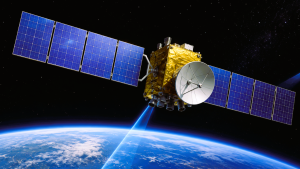
ADCS (Attitude Determination and Control System) is an important subsystem of communication satellites. It determines the satellite’s attitude and controls its orientation, ensuring that communication antennas can accurately point toward ground stations, other satellites, or designated coverage areas.
What Is the Role of ADCS in Communication Satellites?
Maintaining Antenna Pointing Accuracy
Communication satellites use directional antennas to transmit and receive signals. These antennas typically have relatively narrow beam widths. Therefore, satellites must maintain precise pointing toward communication targets. ADCS continuously controls the spacecraft’s attitude to keep the antenna aligned with the target.
Improving Communication Link Quality
Pointing errors can reduce the amount of signal energy received by the target antenna. As pointing errors increase, antenna gain may decrease, resulting in:
Lower signal strength
Reduced link margin
Increased communication errors
Lower data throughput
Communication interruptions
Therefore, precise ADCS can directly improve communication performance.
Compensating for External Disturbances
Communication satellites are continuously affected by various external disturbances during operation. Common disturbances include:
Solar radiation pressure
Gravity-gradient torque
Atmospheric drag
Magnetic torque
Thruster disturbances
These factors can gradually change the satellite’s attitude. ADCS can detect these attitude changes and control the corresponding actuators to maintain the target attitude.
ADCS for GEO Communication Satellites
Geostationary Earth Orbit (GEO) communication satellites have demanding attitude control requirements. GEO satellites must maintain their attitude while continuously providing communication coverage over designated areas.
Their ADCS may need to support:
Precise antenna pointing
Earth-pointing control
Solar array pointing
Orbit maintenance
Momentum management
ADCS for LEO Communication Satellites
LEO communication satellites operate in orbits closer to Earth, and their ADCS faces different space environment conditions.
The system needs to account for:
Atmospheric drag
Earth’s magnetic field
Rapid orbital motion
Solar radiation pressure
Continuously changing communication geometry
Send us a message,we will answer your email shortly!

TY-Space Technology (Beijing) Ltd. is professional focusing on advanced attitude optical sensors, especially Star Trackers for space industry.