
There is no standard price for a star tracker. Different products can vary significantly in attitude accuracy, optical performance, size, reliability, interfaces, and space environmental adaptability. Therefore, their costs can also differ considerably.
Different manufacturers offer products for different spacecraft platforms and mission requirements. Therefore, there is no universal star tracker price.
A basic star tracker for a small satellite may have a significantly different price from a high-performance star tracker designed for a large spacecraft or demanding scientific mission.
When evaluating star tracker cost, buyers should consider the complete product configuration rather than only the initial purchase price.
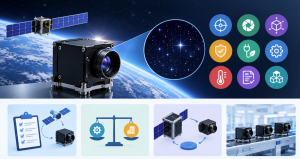
The total cost may include:
How to Reduce Star Tracker Cost?
Reducing star tracker cost does not mean choosing the cheapest product. A more reasonable approach is to optimize the relationship between product performance and mission requirements.
Define Mission Requirements
Determine the required attitude accuracy, update rate, field of view, power consumption, and environmental requirements. This can help avoid unnecessary over-specification.
Choose the Right Performance Level
Not every satellite needs a high-accuracy star tracker. For some missions, a compact and cost-effective star tracker may already meet the mission requirements.
Consider System Integration
Products that are easy to integrate can reduce engineering development and testing costs. Products compatible with the spacecraft's onboard computer and ADCS can simplify system development.
Consider Procurement Volume
For satellite constellations, the unit cost can become an important purchasing factor. Manufacturers may offer different commercial solutions for prototype development, small-batch production, and large-scale deployment.
Send us a message,we will answer your email shortly!

TY-Space Technology (Beijing) Ltd. is professional focusing on advanced attitude optical sensors, especially Star Trackers for space industry.