
What Does an ADCS Do on a Satellite

Home » Star Tracker Sensor Knowledge » What Does an ADCS Do on a Satellite
What Does an ADCS Do on a Satellite

What Does an ADCS Do on a Satellite

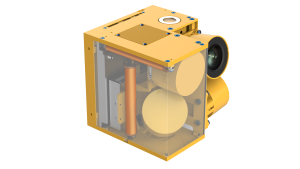
The Attitude Determination and Control System (ADCS) is one of the most important subsystems on a satellite. It continuously measures the spacecraft's attitude, calculates the required attitude corrections, and commands actuators to adjust or maintain the desired orientation.
What Does an ADCS Do on a Satellite

What Is an ADCS?

The Attitude Determination and Control System (ADCS) is responsible for measuring, estimating, and controlling a satellite's attitude in space.

In aerospace engineering, attitude refers to a spacecraft's orientation relative to the Earth, the Sun, stars, or another reference coordinate frame. It does not refer to the spacecraft's position or orbit.

An ADCS performs three primary functions:

  • Attitude Determination – Measures the satellite's current orientation using onboard sensors.
  • Attitude Estimation – Combines data from multiple sensors to calculate the most accurate attitude.
  • Attitude Control – Commands actuators to maintain or change the satellite's orientation as required.

Why Is ADCS So Important?

An ADCS enables a satellite to perform its mission accurately, efficiently, and reliably.

  • Earth observation satellites must continuously point their cameras toward designated target areas.
  • Communication satellites must keep their antennas accurately aligned with ground stations.
  • Space telescopes require extremely stable pointing to observe distant celestial objects.
  • Solar panels must remain oriented toward the Sun to maximize power generation.
  • Scientific payloads must maintain specific orientations to collect accurate measurement data.

Without a reliable ADCS, even the most advanced satellite cannot accomplish its mission successfully.

Typical ADCS Operating Process

An ADCS typically operates in a continuous closed-loop control cycle:

  1. Attitude sensors measure the satellite's current orientation.
  2. The onboard computer fuses data from multiple sensors to estimate the satellite's attitude.
  3. The guidance software compares the current attitude with the desired target attitude.
  4. The control algorithm calculates the required attitude correction.
  5. Actuators generate the necessary control torque to adjust the satellite's orientation.
  6. The sensors measure the updated attitude, and the cycle repeats continuously.

This closed-loop process allows the satellite to maintain precise pointing accuracy throughout its mission.

0/5 (0 Reviews)

Send us a message,we will answer your email shortly!

    Name*

    Email*

    Phone Number

    Message*