
Star trackers and Inertial Navigation Systems (INS) are two widely used attitude determination technologies. Which one performs better? How do they work together?
A star tracker is a high-precision optical attitude sensor. Unlike GPS, magnetic field sensors, or radio navigation systems, it relies entirely on celestial observations. It determines spacecraft attitude by identifying stars. Modern star trackers typically achieve accuracy of several arcseconds or even sub-arcsecond levels. Therefore, they rank among the most accurate attitude sensors used on spacecraft today.
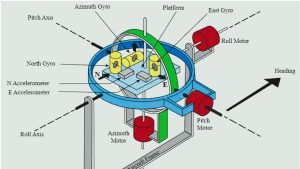
An Inertial Navigation System (INS) is a navigation and attitude determination technology that relies on internal sensors. Gyroscopes measure angular velocity during motion. Accelerometers measure linear acceleration. Meanwhile, the onboard navigation computer continuously integrates these measurements. As a result, it calculates the spacecraft's attitude, velocity, and position.
Unlike a star tracker, an INS depends only on internal measurements. It does not require any external reference. Therefore, it continues operating in sunlight, darkness, or whenever stars are unavailable. This capability ensures uninterrupted attitude estimation under various mission conditions.
Why Do Modern Spacecraft Use Both Technologies?
Most modern satellites carry both a star tracker and an Inertial Navigation System. The INS provides continuous, high-rate attitude estimates. Meanwhile, the star tracker periodically measures the spacecraft's absolute attitude. Next, the navigation computer compares both data sets. It estimates the gyroscope bias from the differences. Finally, it uses these estimates to correct the INS and reduce long-term drift.
Which One Offers Higher Accuracy?
For absolute attitude determination, the star tracker provides much higher accuracy. It uses stars as fixed reference points. Therefore, it does not accumulate drift over time. As a result, it consistently delivers arcsecond or even sub-arcsecond accuracy.
However, the INS performs better during rapid maneuvers and continuous attitude tracking. It outputs attitude data at very high update rates. Consequently, it supports fast control loops and real-time spacecraft guidance more effectively.
Send us a message,we will answer your email shortly!

TY-Space Technology (Beijing) Ltd. is professional focusing on advanced attitude optical sensors, especially Star Trackers for space industry.