
ADCS (Attitude Determination and Control System) is the core spacecraft subsystem responsible for measuring, calculating, and controlling a spacecraft's attitude in space. Without an ADCS, satellites cannot perform communication, Earth observation, astronomical observation, or deep-space exploration missions.
During on-orbit operations, spacecraft continuously experience external disturbances, including solar radiation pressure, Earth's magnetic field, atmospheric drag in Low Earth Orbit (LEO), gravity gradient torque, and mechanical vibrations. Over time, these disturbances gradually cause the spacecraft's attitude to deviate from its desired orientation.
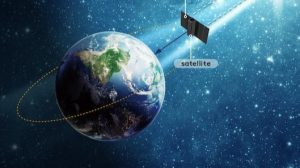
To address this challenge, the ADCS continuously monitors attitude changes and commands actuators to restore the spacecraft to its intended orientation.
Attitude Determination
Attitude determination calculates the spacecraft's current orientation. The system fuses data from multiple sensors and applies attitude estimation algorithms to determine the spacecraft's attitude accurately. Typical outputs include the current attitude, angular velocity, angular acceleration, and sensor confidence levels.
Attitude Control
After obtaining the spacecraft's attitude, the control system calculates the attitude error and generates control commands. The actuators then execute these commands to rotate the spacecraft, eliminate unwanted rotational motion, maintain stable pointing, and track designated targets. These two processes operate continuously throughout the entire mission.
Main Components of a Spacecraft ADCS
Star Tracker
The star tracker is currently the most accurate attitude sensor available for spacecraft attitude determination.
Sun Sensor
The sun sensor measures the direction of the Sun. However, it cannot operate while the spacecraft is in Earth's shadow.
Magnetometer
The magnetometer measures Earth's magnetic field. The ADCS compares the measured magnetic field with a geomagnetic model to assist in attitude estimation.
Gyroscope
The gyroscope measures the spacecraft's angular velocity. Unlike a star tracker, it continuously provides rotational motion data.
GPS Receiver
Many satellites operating in Low Earth Orbit (LEO) are equipped with GPS receivers.
Reaction Wheel
A reaction wheel generates control torque by changing the rotational speed of its flywheel, allowing the spacecraft to adjust its attitude precisely.
Magnetorquer
A magnetorquer generates control torque by interacting with Earth's magnetic field. However, it is only effective for spacecraft operating in Earth orbit.
Thruster
Large spacecraft typically use thrusters for attitude control. Thrusters generate high control torque and enable rapid attitude maneuvers.
Send us a message,we will answer your email shortly!

TY-Space Technology (Beijing) Ltd. is professional focusing on advanced attitude optical sensors, especially Star Trackers for space industry.