
The power consumption of star trackers significantly extends the satellite’s on-orbit life, reduces the need for solar panels and batteries, and lightens the load on the thermal control system.
Satellite power systems mainly rely on solar panels and batteries. In Low Earth Orbit (LEO), satellites complete an orbit every 90 minutes, spending about half of this time in Earth’s shadow, where they rely entirely on battery power. Excessive power consumption by the star tracker can reduce the available power for other payloads, such as communication systems, cameras, or scientific instruments.
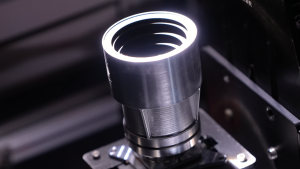
Key Factors Affecting Star Tracker Power Consumption
Operating Mode and Update Rate: The LIS mode requires scanning a larger field of view, resulting in higher power consumption. In the tracking mode, optimized algorithms significantly reduce power use. Increasing the update rate (from 1Hz to 10Hz) linearly raises the power consumption.
Sensor Type and Processing Unit: CMOS image sensors consume less power than traditional CCDs. Image processing units integrated with FPGAs or dedicated ASICs are major power consumers. Low-power designs often use simplified algorithms or coarse tracking modes.
Baffle and Optical System: The baffle reduces stray light but does not directly increase electrical power consumption. The optical aperture and focal length affect the exposure time, which indirectly influences processing load.
Temperature and Orbital Environment: Extreme temperatures in space (from -30°C to +55°C or wider ranges) can affect the efficiency of electronic components. The radiation environment requires hardened components, which may slightly increase power consumption. Since LEO satellites frequently pass in and out of shadow areas, the orbit’s average power consumption must be considered.
Payload and Slew Rate: Higher angular velocity tracking (greater than 1-2°/s) requires faster processing, which increases power consumption. A lower slew rate design is more energy-efficient.
Voltage and Power Management: Low-voltage power supplies (3.3-5V) help reduce overall power consumption. Smart power management systems can further optimize power use through Duty Cycle control.
Send us a message,we will answer your email shortly!

TY-Space Technology (Beijing) Ltd. is professional focusing on advanced attitude optical sensors, especially Star Trackers for space industry.