
Satellite attitude refers to the orientation of a spacecraft in three-dimensional space relative to an inertial reference frame. Engineers usually describe it using three angles: roll, pitch, and yaw. If the attitude determination accuracy is insufficient, satellites accumulate errors over time.
Star sensors serve as compact, autonomous optical instruments mounted on satellites. They function like advanced digital cameras specifically designed for star-field calibration in the night sky. These sensors capture wide-field images of the star field, process the data onboard, and output the satellite’s precise attitude in the form of quaternions or rotation matrices.
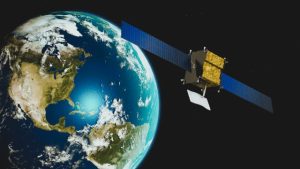
Comparison of Star Sensors with Traditional Attitude Sensors
– Sun Sensors: These devices detect the direction of the Sun and achieve an accuracy of about 1 arcminute. However, they operate only on two axes and require the Sun to be visible. Consequently, they can only provide coarse attitude information and fail during eclipses or in deep-space missions.
– Earth Horizon Sensors: These sensors suit Earth-pointing missions in low Earth orbit and deliver an accuracy of approximately 0.1–0.5 degrees. Nevertheless, they suffer greatly from the irregular shape of the Earth’s horizon and atmospheric effects.
– Magnetometers: These instruments depend heavily on the satellite’s orbit, offer relatively low accuracy (around 1 degree), and remain vulnerable to magnetic interference.
– Inertial Measurement Units (IMUs) or Gyroscopes: These components excel at short-term rate measurements. Yet, they accumulate drift over time—even high-quality fiber-optic gyroscopes drift by about 0.01° per hour. Therefore, they require regular calibration using absolute references.
Star sensors surpass these traditional sensors by delivering full three-axis, absolute attitude determination with accuracy at the arcsecond level. Moreover, they operate independently of orbit, time, or any external reference. As a result, they effectively eliminate accumulated errors and enable long-duration missions without frequent ground intervention. When engineers fuse star sensors with gyroscopes, the combination achieves the micro-radian pointing stability required for laser communication or astronomical observations.
Main Advantages of Star Sensors
– High Precision: Modern star trackers reach an accuracy of 1–5 arcseconds (high-end models such as those from Adcole perform even better). Consequently, they support Earth imaging with sub-meter ground resolution.
– High Autonomy and Reliability: Star sensors do not require any initial attitude guess. In addition, their pattern recognition works effectively from any position in the sky. Furthermore, redundant head designs provide excellent fault tolerance.
– Drift-Free Operation: Unlike gyroscopes, star sensors continuously reset to an absolute reference. Thus, they maintain high accuracy over several years.
– Strong Mission Adaptability: From large constellations in low Earth orbit to deep-space probes, star sensors handle high rotation rates (thanks to advanced de-blurring techniques) and complex stray-light suppression.
– Resource Efficiency: Miniaturized versions deliver powerful performance for small satellites while significantly reducing mass and power budgets.
Send us a message,we will answer your email shortly!

TY-Space Technology (Beijing) Ltd. is professional focusing on advanced attitude optical sensors, especially Star Trackers for space industry.