Satellite and Spacecraft Attitude Determination (Attitude Determination) is the core technology that ensures stable operation of equipment and precise pointing toward targets. Star Sensor (Star Tracker) and Sun Sensors are two of the most common optical attitude sensors.
A Sun Sensor is a device that uses the Sun as a reference light source to measure the direction of the Sun vector relative to the spacecraft body coordinate system. It is essentially a photoelectric sensor that outputs attitude information by detecting the incident angle of sunlight on the detector surface.
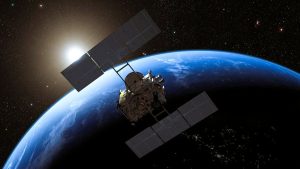
A Star Sensor, also known as a Star Tracker, is hailed as the “eyes” of a spacecraft. It captures images of the star field, identifies the positions of known stars, and matches them with a built-in star catalog, thereby directly calculating the spacecraft’s three-axis attitude in the inertial coordinate system.
Advantages of Sun Sensors:
- They are simple and reliable with low failure rates, making them ideal as backup or initial acquisition sensors.
- They offer low cost and low power consumption, perfectly suiting micro-nano satellites and missions with limited budgets.
- They respond quickly and can rapidly provide the Sun vector for solar array orientation and thermal control.
Disadvantages of Sun Sensors:
- Their accuracy is limited and they cannot independently provide full three-axis attitude.
- They completely fail when the Sun is not visible (such as during orbital night or in deep space).
- They are susceptible to stray light interference, requiring careful installation position design.
Advantages of Star Sensors:
- They deliver the highest precision and autonomy, serving as the core of modern satellite ADCS (Attitude Determination and Control Systems).
- They support direct attitude determination in inertial space without needing external reference sources.
- When fused with gyroscopes, magnetometers, and other sensors, they enable continuous high-precision output.
Disadvantages of Star Sensor:
- They have high costs and demand significant computing resources.
- They are sensitive to dynamic environments (star spots become blurred at high angular rates).
- Their field of view is relatively narrow, so multiple units with redundancy must be installed to avoid blind zones (caused by interference from the Sun, Earth, or Moon).
- Radiation environments affect CCD/CMOS sensors, requiring radiation-hardened designs.
Comparison of Practical Application Scenarios
Typical Applications of Sun Sensors:
- Initial attitude acquisition and safe mode operations for small satellites (such as CubeSats).
- Solar array orientation.
- Combined use with magnetometers and Earth sensors to achieve low-precision three-axis control.
- Coarse pointing in low Earth orbit missions.
Typical Applications of Star Sensors:
- High-resolution Earth observation satellites (such as resource satellites).
- Deep space probes (such as missions to Mars and Jupiter).
- Scientific satellites and astronomical observation platforms.
- Commercial satellite constellations.