
Due to their unique operating environment, star sensors must function reliably in the harsh vacuum of space for extended periods. Space exposes optical systems and electronic devices to extreme temperature variations, material outgassing, radiation, and the absence of atmospheric pressure.
For star sensors, even an extremely thin contamination layer on the lens surface can affect star detection capability and measurement accuracy. In addition, the vacuum environment can accelerate the degradation of certain materials, coatings, adhesives, and connectors. Therefore, durability is a critical consideration in star sensor design.
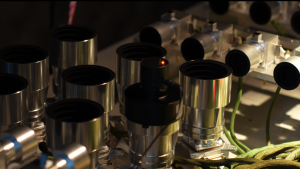
Why Vacuum Durability Is Critical for Star Sensors
A star sensor integrates an optical system, image sensor, processing electronics, structural components, and a thermal control system into a compact device. If any subsystem degrades, overall measurement performance may suffer.
As a result, maintaining durability in a vacuum environment is essential for long-term mission success.
The Importance of Thermal Vacuum Testing
Before launch, star sensors must undergo rigorous environmental qualification testing. One of the most important evaluations is the Thermal Vacuum Test (TVAC).
During the test, engineers operate the star sensor inside a large vacuum chamber. This setup simulates the actual space environment as closely as possible.
Engineers focus on evaluating:
During testing, the chamber typically reaches high-vacuum conditions similar to those in orbit. Engineers also perform multiple temperature cycles to simulate long-term on-orbit operation.
Only after successfully passing thermal vacuum verification can the equipment qualify for flight missions.
Combined Effects of Radiation and Vacuum
Radiation, thermal cycling, and vacuum conditions often act together in space. When these factors combine, they can accelerate equipment aging and performance degradation.
Therefore, space-grade star sensors commonly incorporate:
These design approaches significantly improve reliability during long-duration missions.
Send us a message,we will answer your email shortly!

TY-Space Technology (Beijing) Ltd. is professional focusing on advanced attitude optical sensors, especially Star Trackers for space industry.