
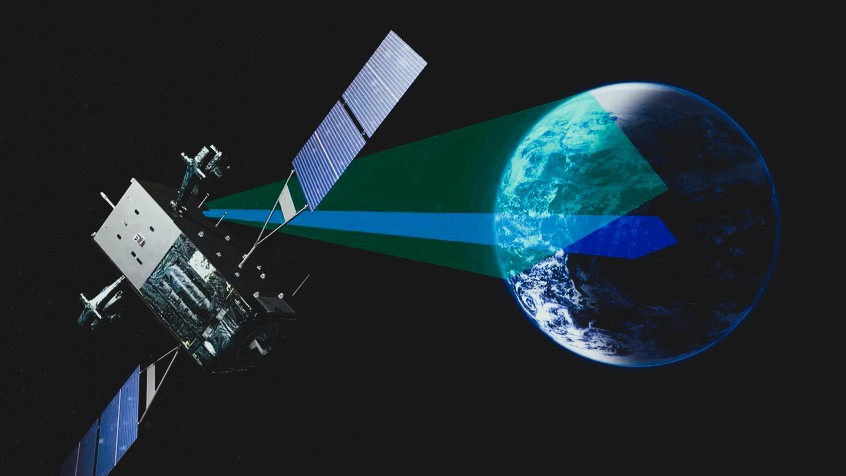
What do satellites and sensors mean in remote sensing?
Remote sensing’s core gathers information about objects or areas without physical contact. Satellites equipped with advanced sensors act as eyes in the sky. They capture data from space to analyze Earth’s surface, atmosphere, and even other planetary bodies.
Sensors on satellites detect electromagnetic radiation across various wavelengths. They convert it into usable data, such as images or measurements. This technology extends beyond visible light. It spans the electromagnetic spectrum, including infrared, microwave, and ultraviolet regions. The synergy between satellites and sensors enables continuous global coverage. Thus, it becomes indispensable in fields like geography, geophysics, and environmental science.
Unlike ground-based observations, satellite sensors offer a bird’s-eye view. They monitor vast and hard-to-reach areas, such as oceans, forests, and polar regions. This capability transforms how we track environmental changes, urban development, and natural resources.

Types of Satellite Sensors:
Satellite sensors fall into two main categories based on their energy sources: active and passive.
Passive sensors rely on natural energy sources. They mainly come from sunlight reflected off Earth’s surface or thermal emissions from objects. These sensors capture data during daylight or with sufficient ambient energy. Common examples include optical sensors. They produce high-resolution images resembling photographs.
Active sensors generate their own energy signals. They usually take the form of radar or laser pulses. Then, they measure reflections or backscatter from targets. This makes them independent of sunlight. They penetrate clouds or operate at night.
Active sensors provide higher accuracy in harsh conditions. However, they require more power and complex data processing.
Additionally, hybrid systems combine multiple sensor types on a single satellite. This enhances data versatility. For example, hyperspectral sensors capture hundreds of narrow bands. They allow detailed chemical analysis of soils or minerals.
Environmental Monitoring and Climate Change
Satellites equipped with sensors track global environmental changes with unprecedented accuracy. For instance, they monitor deforestation, measure sea level rise, and detect greenhouse gas concentrations. Earth observation systems use sensor data to model climate patterns. This helps predict events like El Niño.
Agriculture and Precision Farming
In agriculture, satellite sensors revolutionize crop management. Farmers analyze vegetation indices like NDVI (Normalized Difference Vegetation Index). They assess plant health, optimize irrigation, and predict yields.
Disaster Management and Response
During natural disasters, satellites provide real-time data for rapid response. Sensors detect wildfires through thermal imaging. They map flood extents using radar. Additionally, they assess earthquake damage via before-and-after comparisons.
Urban Planning and Infrastructure
Urban planners use satellite sensor data to monitor city growth, traffic patterns, and infrastructure health. High-resolution images aid in designing sustainable cities. Meanwhile, sensors detect subsidence in buildings or roads.
Military and Security Uses
In defense, satellites with advanced sensors support reconnaissance, border surveillance, and missile detection. Their ability to operate covertly and cover large areas makes them crucial for national security.
Send us a message,we will answer your email shortly!

TY-Space Technology (Beijing) Ltd. is professional focusing on advanced attitude optical sensors, especially Star Trackers for space industry.