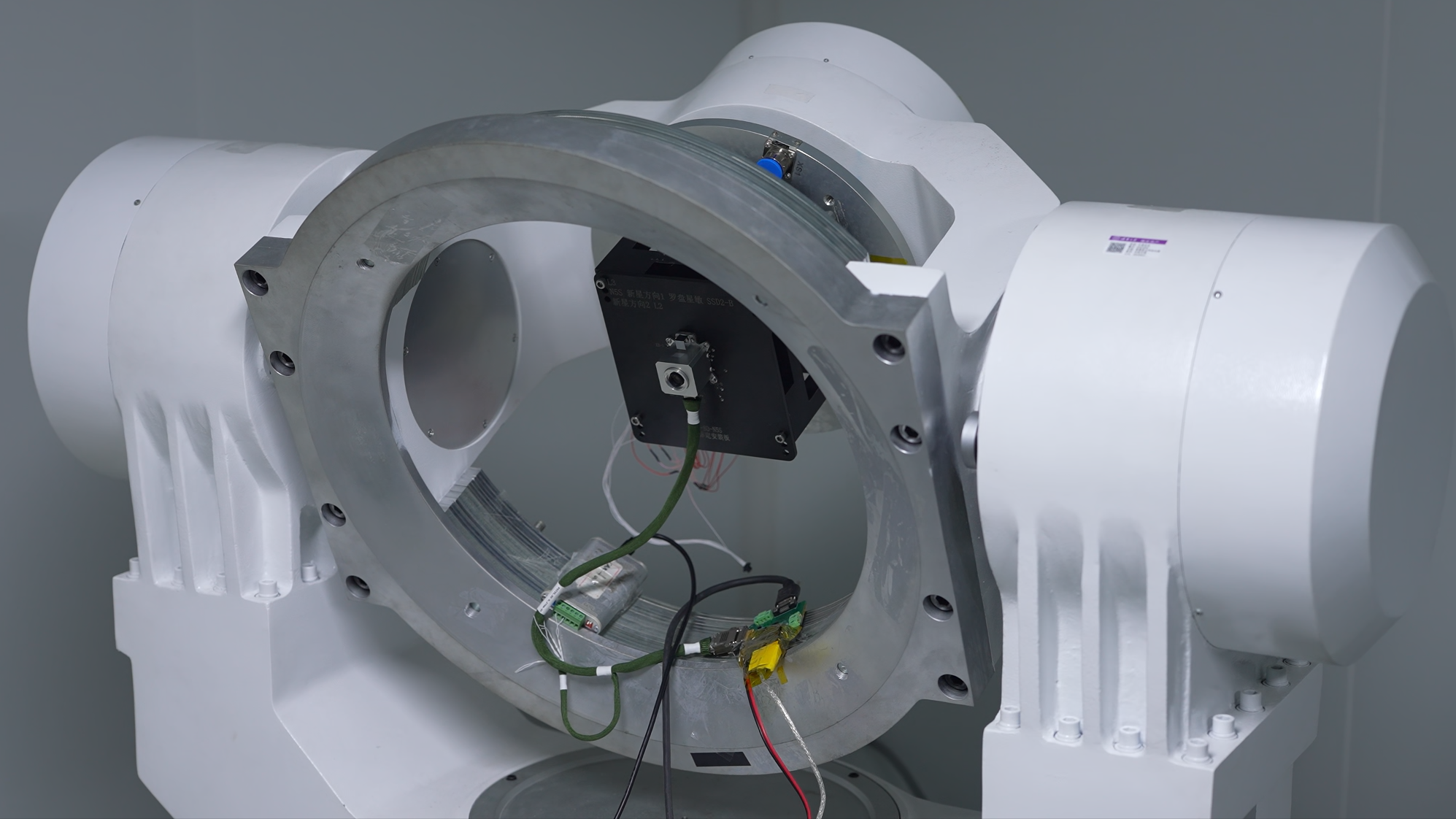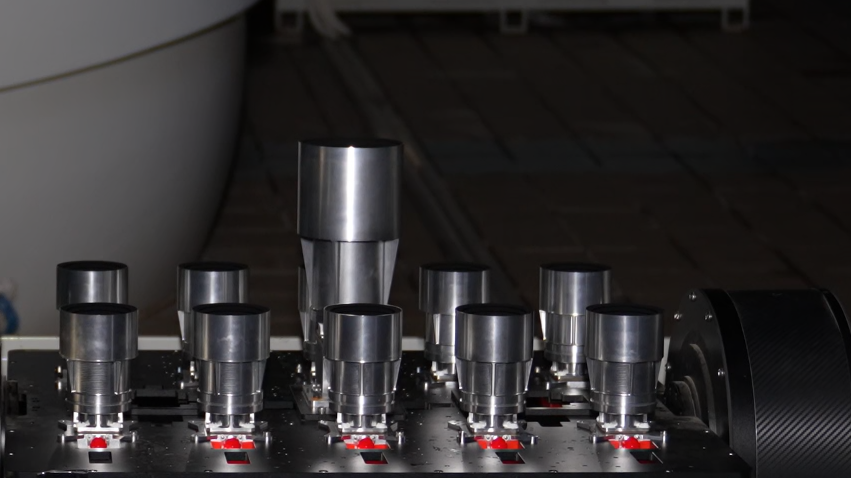
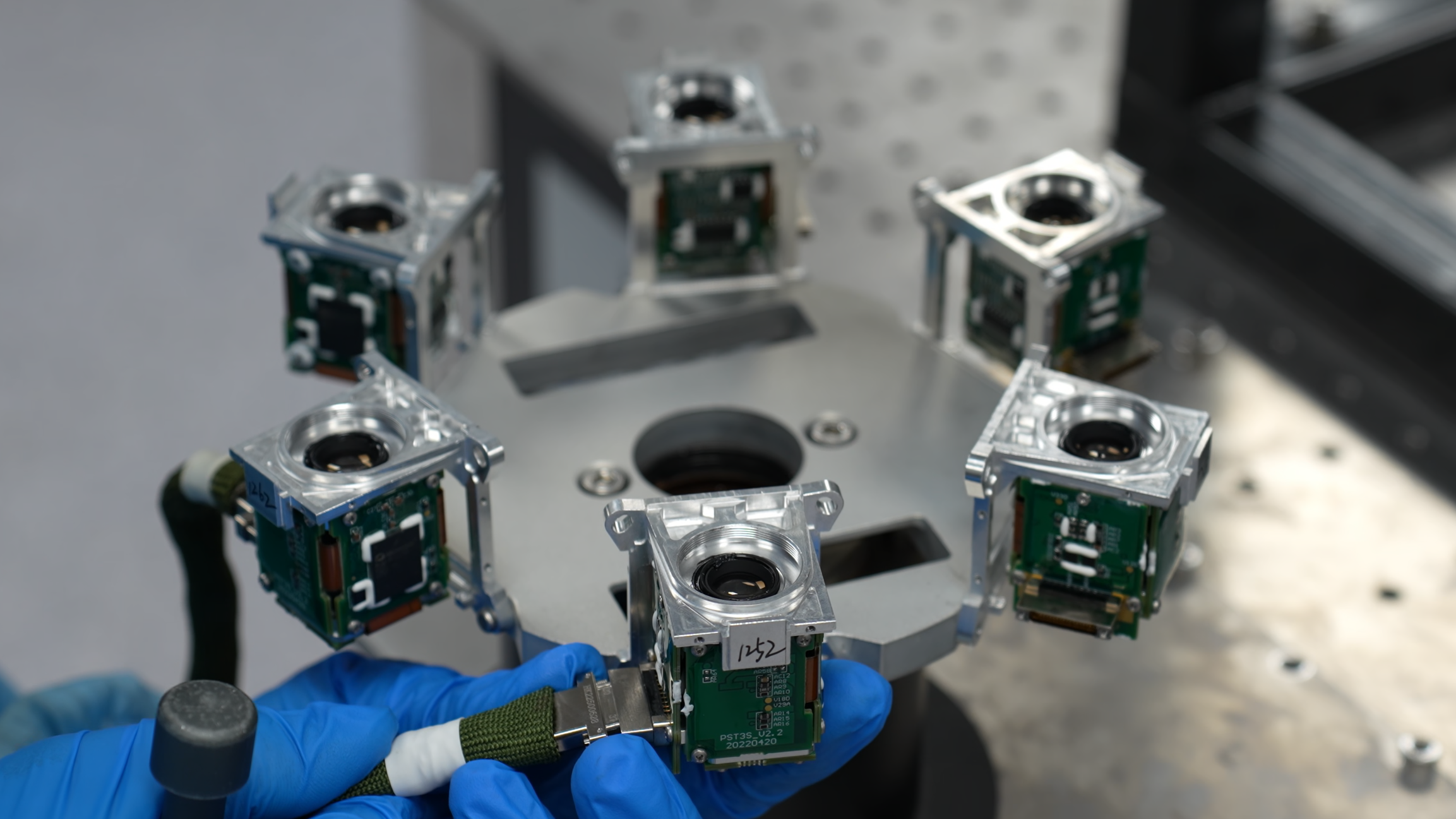
A star tracker is a high-precision optical imaging device. Engineers mount it on satellites, deep-space probes, or crewed spacecraft. However, after production, lens distortion, focal length thermal drift, principal point shift, mounting errors, and radiation damage cause measurement deviations. Therefore, Engineers divide star tracker calibration.
An insufficiently calibrated star tracker can trigger serious problems. For example:
– Thruster firing direction deviates, so the spacecraft loses orbit or attitude control.
– Antennas point incorrectly and lose communication with Earth.
– Scientific payloads (such as optical cameras and radio telescopes) fail to align precisely with targets.
– Fuel wastes unnecessarily and shortens satellite lifespan.
Engineers divide star tracker calibration into two major phases: ground laboratory calibration and on-orbit calibration.
Ground Laboratory Calibration
Technicians perform ground calibration in controlled environments. They mainly aim to:
– Establish camera intrinsic parameters (focal length, principal point, distortion coefficients)
– Determine the mounting matrix between the star tracker and the spacecraft body.
– Verify star identification algorithm performance across the full field of view and full dynamic range.
Common technical approaches include:
Collimator + Single/Multi-Star Simulator
Engineers use high-precision collimators to generate collimated beams that simulate distant stars. They then rotate a precision turntable, capture star images at different boresight directions, and build a complete intrinsic parameter model.
High-Precision Star Field Simulator
Technicians employ OLED or LCOS displays to project real star maps. These simulators reproduce different stellar magnitudes, sky regions, and even complex scenes with planets and bright star interference.
Earth Rotation Natural Sky Calibration Method
For budget-limited CubeSats or university projects, engineers choose a highly cost-effective approach. They fix the star tracker outdoors and continuously image the night sky for one full night. Earth’s rotation acts as an ultra-large, ultra-precise turntable. This method collects real star data covering the entire field of view. When combined with high-precision star catalogs, it achieves sub-pixel calibration accuracy at only 1/50 the cost of traditional methods.
On-Orbit Calibration
After launch, star trackers face challenges that ground tests cannot fully replicate, such as thermal-vacuum deformation, radiation damage, and microgravity release. At this stage, engineers perform on-orbit or in-flight calibration.
Mainstream on-orbit calibration methods:
Iterative Calibration Based on Star Vector Residuals
Engineers apply Kalman filtering or least-squares methods. They continuously estimate and correct focal length drift, principal point shift, and low-order distortion coefficients. Typically, they execute this process every few hours to days.
Joint Gyro + Star tracker Calibration
Engineers use attitude changes integrated from gyroscopes as reference. They then dynamically calibrate the star tracker. This approach significantly improves convergence speed and robustness.
Send us a message,we will answer your email shortly!

TY-Space Technology (Beijing) Ltd. is professional focusing on advanced attitude optical sensors, especially Star Trackers for space industry.