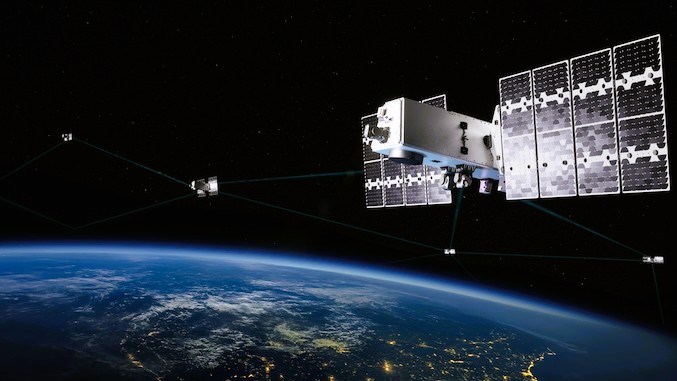
Cube satellites, or CubeSats, are standardized nanosatellites. Their basic unit (1U) measures 10cm × 10cm × 10cm and weighs up to 2 kg (typically 1.33 kg).
Designers can stack units to create 3U, 6U, 12U, or even larger satellites.

Main Applications of CubeSats
Earth Observation & Remote Sensing
This remains the most widely used and commercialized application.
CubeSats carry high-resolution cameras, multispectral sensors, or synthetic aperture radar.
They frequently capture Earth’s surface and deliver real-time data.
They actively monitor:
– climate change, deforestation, and urban expansion
– precision agriculture (crop health, irrigation, yield prediction)
– natural disasters (floods, earthquakes, wildfires)
– ocean color and fishery resources
– traffic flow and smart city planning
Scientific Experiments & Technology Demonstration
CubeSats serve as ideal low-cost space testbeds. Researchers use them to:
– test new propulsion systems, materials, antennas, and batteries
– observe space weather (solar flares, radiation, electromagnetic environment)
– conduct space biology experiments (microgravity effects on organisms)
– validate cutting-edge technologies like quantum and laser communication
– support precursor missions for deep-space exploration
Communication & IoT Services
Many companies deploy narrowband 5G IoT constellations using CubeSats.
These satellites provide low-data-rate, low-power global connectivity.
They effectively serve remote areas, oceans, aviation, railways, and agriculture.
Because of their low cost and rapid deployment, CubeSats become valuable supplements to terrestrial cellular networks.
Core Advantages of CubeSats
– Extremely low cost: A complete satellite (development + launch) usually costs $0.5–2 million.
– Fast iteration: Teams move from concept to orbit in just 1–2 years.
– High fault tolerance: Low failure cost encourages bold innovation.
– Strong constellation capability: Multiple satellites work together to achieve frequent, wide coverage.
– Low entry barrier: Universities, startups, and emerging space agencies can all participate.
Send us a message,we will answer your email shortly!

TY-Space Technology (Beijing) Ltd. is professional focusing on advanced attitude optical sensors, especially Star Trackers for space industry.