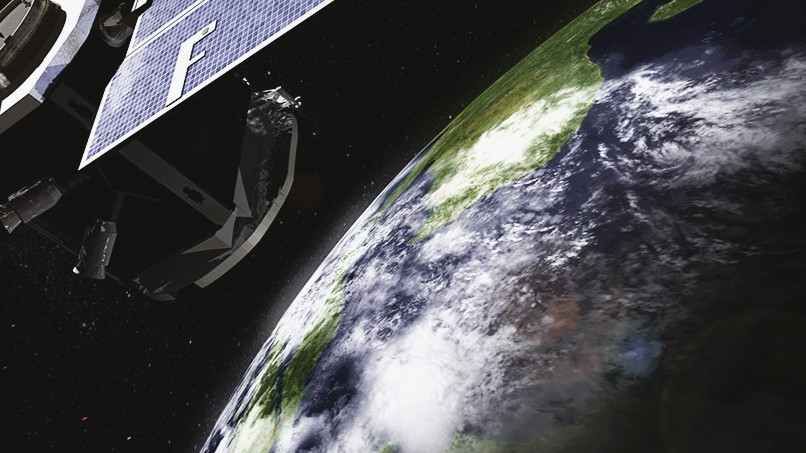
Gyroscopes (commonly shortened to “gyros”) form part of the Inertial Measurement Unit (IMU). They actively measure angular rates and calculate attitude changes over time. Traditional mechanical gyros have largely disappeared. Today, spacecraft mainly use fiber optic gyros (FOG), ring laser gyros (RLG), or micro-electro-mechanical system (MEMS) gyros. These modern types offer small size, high reliability, and no moving parts.
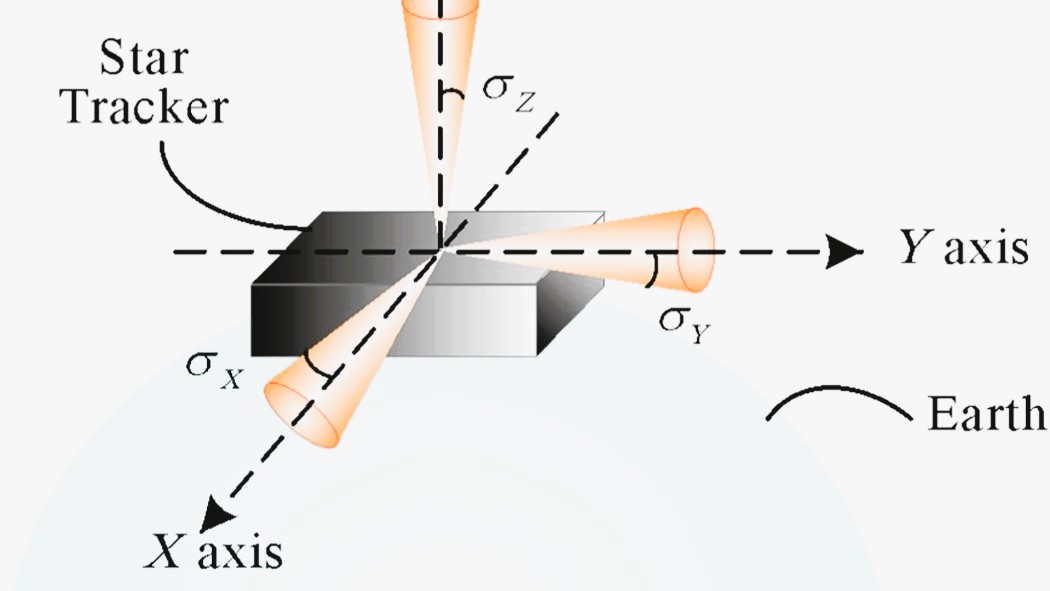
A star tracker is a high-precision optical sensor, often called the “eyes” of a spacecraft. It captures starfield images and matches them against an onboard star catalog to determine the spacecraft’s absolute attitude.
Accuracy and Drift Behavior Star trackers deliver superior absolute accuracy, reaching sub-arcsecond levels with zero drift. Gyroscopes provide very precise rate measurements (advanced models achieve 0.01°/h), yet integration causes errors to grow linearly. For long-duration, high-stability pointing missions, star trackers remain irreplaceable. In transient high-dynamic situations, however, gyroscopes respond faster and perform better.
Environmental Robustness and Reliability Gyroscopes completely ignore light, glare, and occultation. They suit missions near planets, frequent shadow entries/exits, or low Earth orbits. Star trackers demand a clear field of view and suffer easily from bright sources or blockages. Solid-state gyros (FOG/RLG) usually show higher reliability than optical star trackers under radiation and vibration stress.
Power, Size, and Cost MEMS gyroscopes consume only a few hundred milliwatts, occupy centimeter-scale volume, and cost little. They fit perfectly on micro-satellites. Star trackers typically require larger apertures and greater computing power. Consequently, they consume more power and cost significantly more (high-end models often reach tens of thousands of dollars). Still, they deliver excellent value in high-priority missions.
Typical Application Scenarios
Geostationary and Earth-observation satellites rely mainly on star trackers for high-precision pointing.
Deep-space probes (e.g., Voyager, New Horizons) use gyroscopes for initial maneuvers and rapid slews, while star trackers handle fine navigation.
Small satellites and CubeSats commonly combine MEMS gyros with low-cost star trackers.
Military and reconnaissance satellites exploit gyroscopes for fast slewing and star trackers for sustained stable pointing.
Send us a message,we will answer your email shortly!

TY-Space Technology (Beijing) Ltd. is professional focusing on advanced attitude optical sensors, especially Star Trackers for space industry.