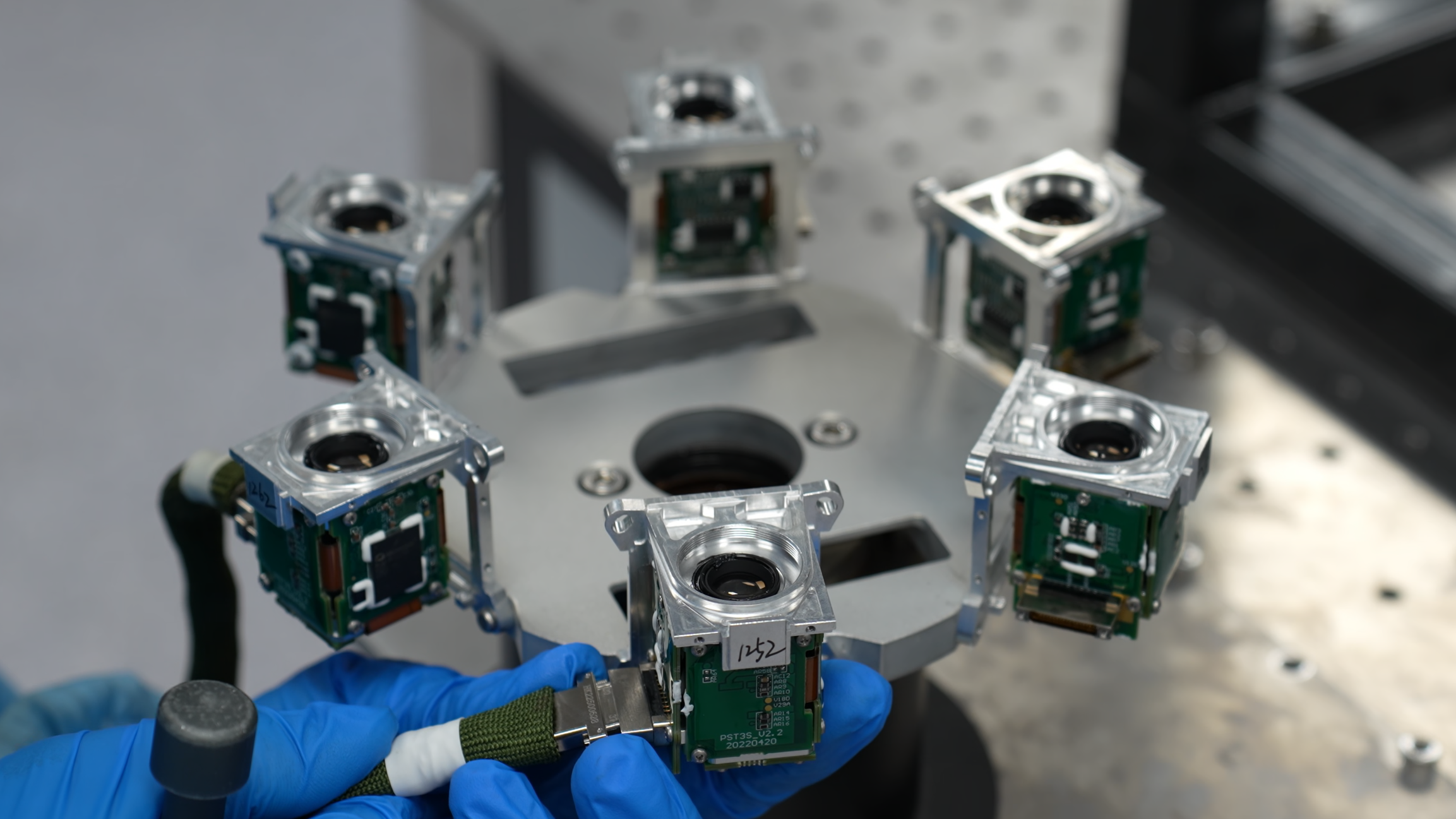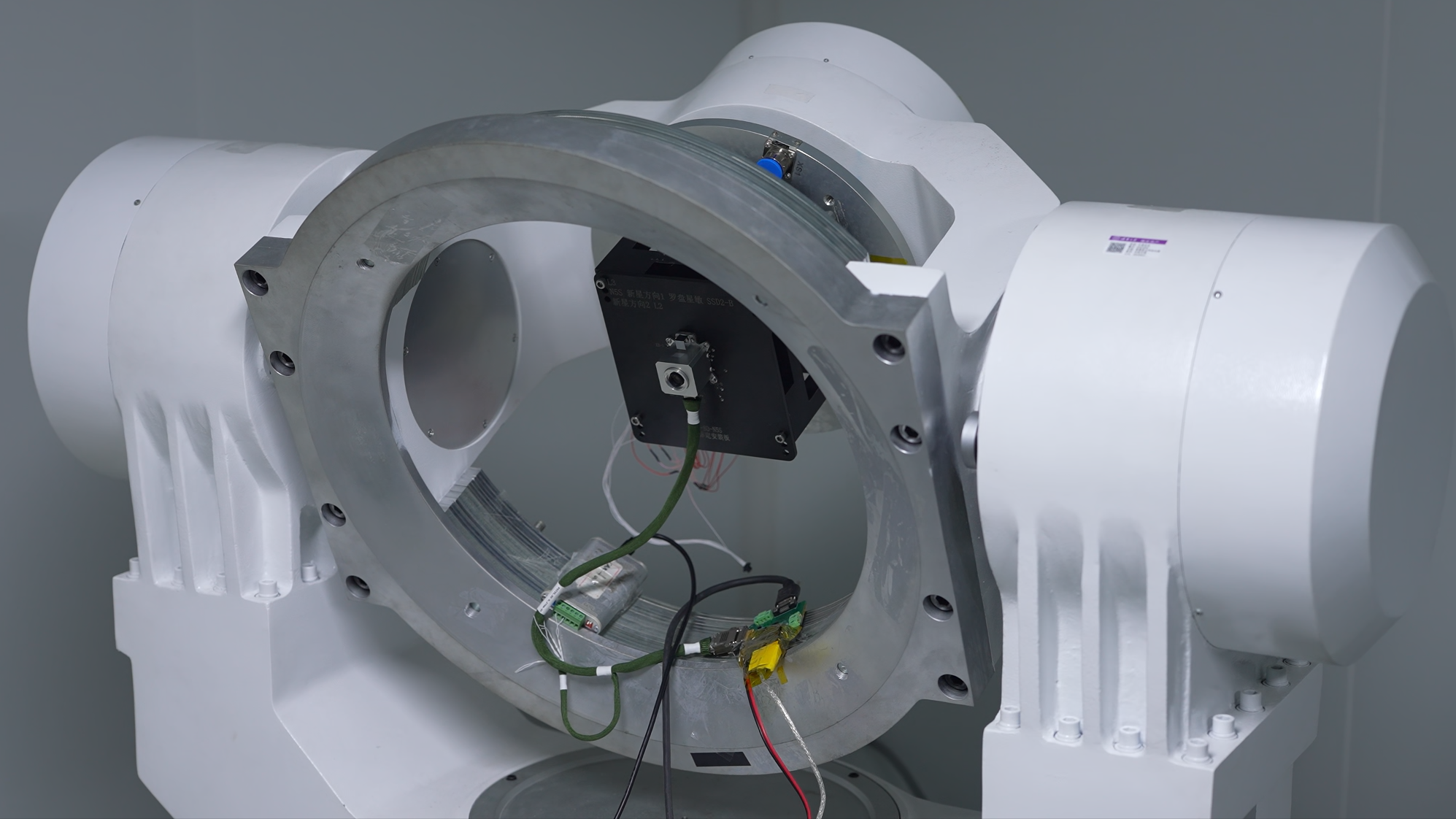
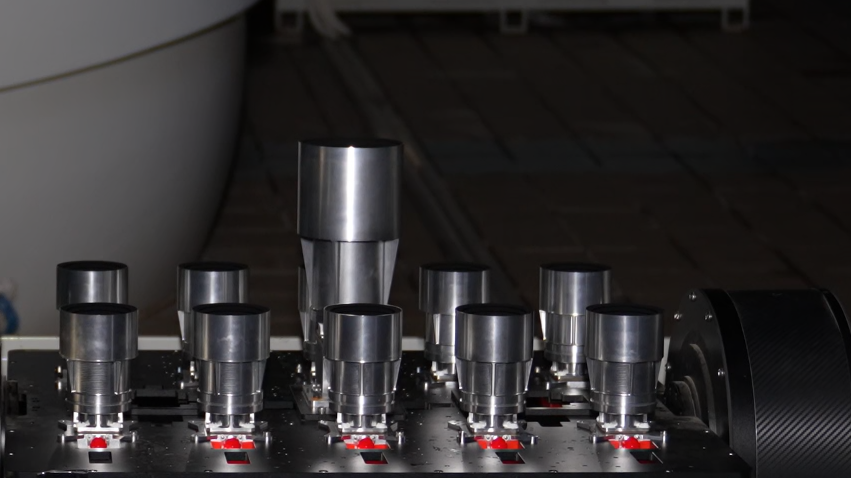
A star tracker, also called a star sensor, captures images of stars and matches them against an internal star catalog to determine a spacecraft’s three-axis attitude. For small satellites, manufacturers design star trackers to achieve extreme miniaturization, light weight, and low power consumption. Thus, they meet strict size, weight, and power (SWaP) limits.
Ultra-High Precision Attitude Control
Star trackers deliver roll/pitch/yaw accuracy of 3–10 arcseconds. Therefore, they satisfy demanding pointing requirements for high-resolution imaging, laser communication, and deep-space science missions.
Extreme Miniaturization and Light Weight
Mainstream products weigh only 40–400 grams and fit within 50×50×90 mm. Consequently, they free up valuable space for payloads.
Ultra-Low Power Consumption
Average power draw stays between 0.5–2 W. Moreover, some models (like CubeStar) consume just 0.14 W, greatly extending survival time in eclipse periods.
Strong Radiation Resistance and High Reliability
Most products have proven 7+ years of life in LEO orbits. They withstand 9–30 krad of radiation, and several models offer a 7-year warranty.
Significantly Improved Cost-Effectiveness
Thanks to commercial off-the-shelf (COTS) trends, prices have dropped from hundreds of thousands to tens of thousands of dollars. Now, universities and startups can easily afford them.
Wide Range of Applications
Engineers deploy small-satellite star trackers everywhere—from Earth observation to inter-satellite links, and from deep-space exploration to mega-constellations.
Attitude Accuracy and Update Rate
Field of View (FOV) and Sun Exclusion Angle
Size, Weight, and Power Consumption (SWaP)
Interface and Integration Complexity
Environmental Adaptability
Send us a message,we will answer your email shortly!

TY-Space Technology (Beijing) Ltd. is professional focusing on advanced attitude optical sensors, especially Star Trackers for space industry.