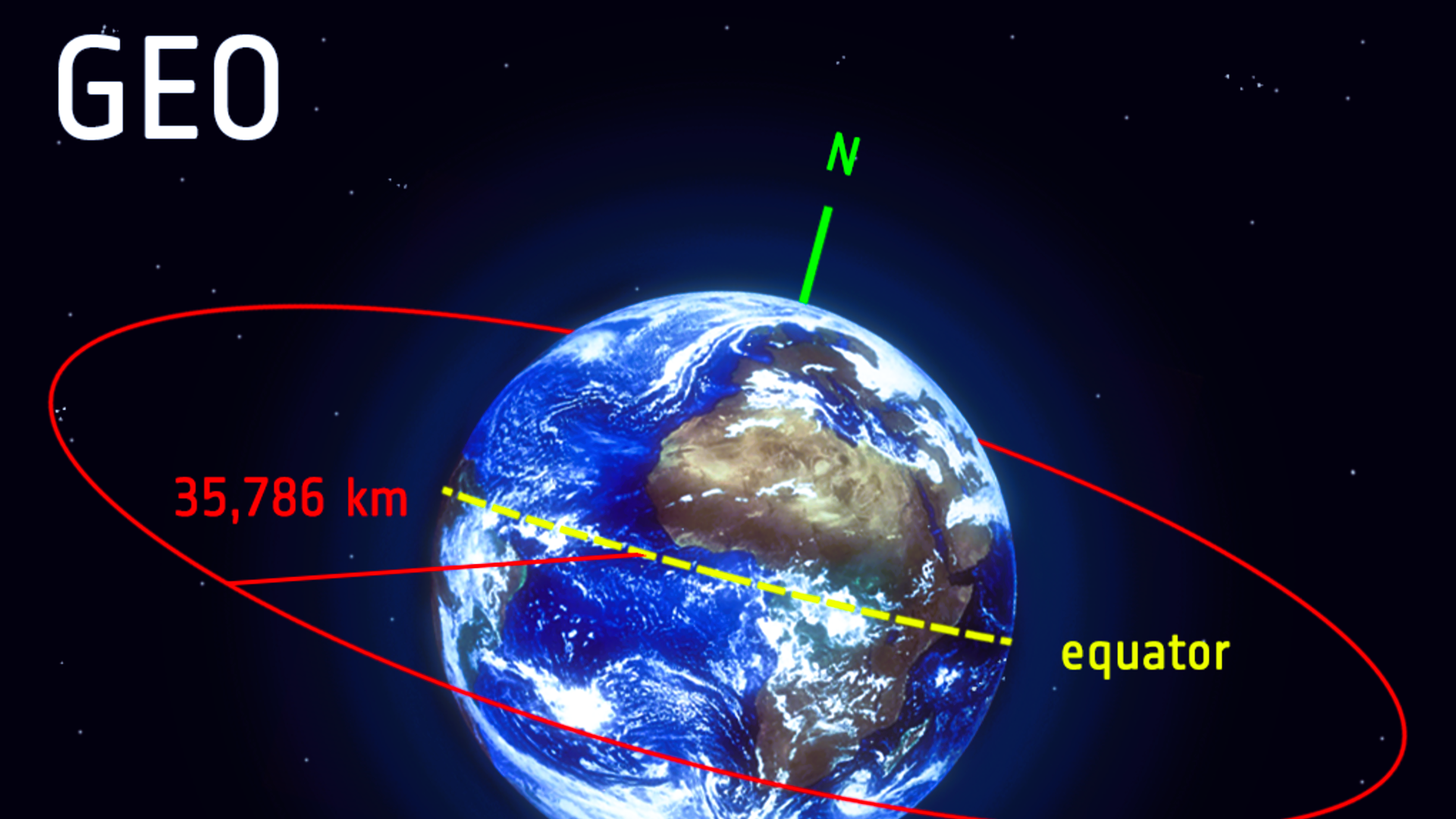
Star trackers determine a spacecraft’s three-axis attitude by observing and identifying stars in the sky. For GEO satellites operating at an altitude of approximately 35,786 km and synchronized with Earth’s rotation, even the slightest attitude deviation can interrupt communication signals, shift coverage areas, or distort scientific data. Therefore, star trackers play a critical role in ensuring the long operational life and high reliability of GEO satellites.
GEO satellites actively support:
Communication and broadcasting (television, satellite phones, broadband internet)
Meteorological observation (global weather forecasting, typhoon monitoring)
Navigation augmentation and positioning calibration
Military reconnaissance and early warning
The GEO orbital environment presents several challenges, including high-energy radiation, extreme temperature variations, and long-term perturbations from the Sun and Moon, all of which can cause satellite drift or attitude disturbances. Unlike low Earth orbit (LEO) satellites that frequently enter and exit Earth’s shadow, GEO satellites maintain a relatively stable field of view. This stability creates an ideal environment for star trackers to deliver their best performance.
Star trackers offer several significant benefits in GEO missions:
Extremely high accuracy — They consistently achieve sub-arcsecond precision over long periods, far surpassing most other single trackers.
Complete autonomy — They enable extended periods of unmanned operation, significantly reducing the burden on ground control.
All-weather performance — Unlike sun trackers, they remain unaffected by Earth occultation or eclipses.
Propellant savings — By reducing the frequency of attitude corrections, they help extend the satellite’s operational lifespan.
Support for high-precision payloads — They enable precise pointing for communication antennas, laser communication systems, remote sensing imaging, and more.
Challenges in the GEO Environment and Corresponding Solutions
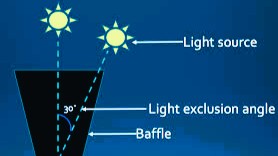
Stray light interference Sunlight and Earth albedo can cause “star loss.” → Solutions: Engineers implement complex baffles, intelligent exposure control, and AI-assisted star identification.
Long-term radiation damage Radiation gradually increases detector noise and creates more bad pixels. → Solutions: Designers use radiation-hardened CMOS trackers, shielding materials, and on-orbit self-calibration techniques.
Size, weight, and power (SWaP) constraints → Solutions: The industry has widely adopted miniaturized designs, with mainstream star trackers now weighing less than 1 kg and consuming under 5 W.
Cybersecurity risks → Solutions: Manufacturers incorporate firmware encryption, secure boot mechanisms, and anti-tamper designs.
Send us a message,we will answer your email shortly!

TY-Space Technology (Beijing) Ltd. is professional focusing on advanced attitude optical sensors, especially Star Trackers for space industry.