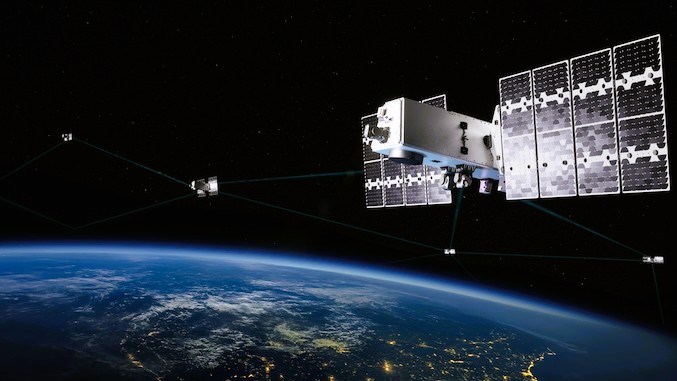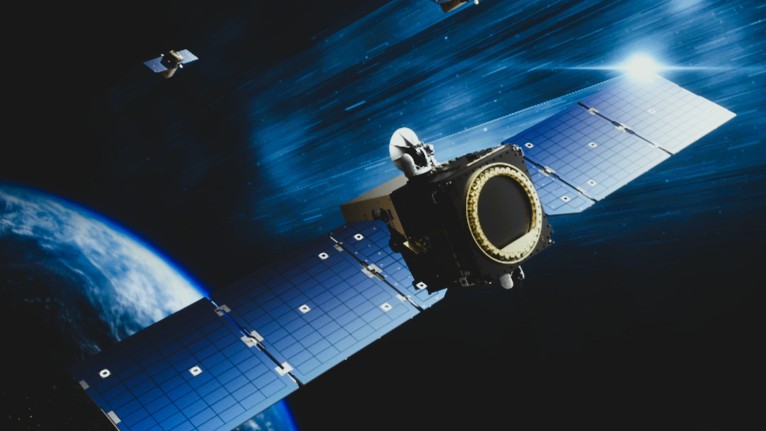
In the vast universe, precision is paramount, and star tracker attitude determination serves as a cornerstone technology for spacecraft navigation and control, playing an irreplaceable role. This advanced technology actively utilizes fixed stellar patterns to determine a spacecraft’s attitude (its three-dimensional orientation) with exceptional accuracy.
A star tracker, an optical device mounted on a spacecraft, actively captures star field images and uses them to calculate the spacecraft’s three-dimensional attitude. Attitude determination involves pinpointing the spacecraft’s orientation relative to a reference frame, typically an inertial system based on celestial bodies. Unlike traditional gyroscopes, which may drift over time, or solar sensors, which face environmental limitations, star trackers actively match observed stars with a preloaded star catalog database, providing absolute attitude information.
– Optical Lens and Sensor: The system’s “eyes” typically employ a charge-coupled device (CCD) or complementary metal-oxide-semiconductor (CMOS) sensor paired with a wide-angle lens. The sensor actively captures starlight and converts it into digital images.
– Stray Light Shield and Baffle: To prevent interference from stray light sources like the sun or Earth, the system incorporates a baffle, ensuring only starlight enters the sensor, maintaining image clarity.
– Onboard Processor: Equipped with algorithms for image processing, star identification, and attitude calculation, modern processors handle high-speed data, delivering update rates up to 10Hz.
– Star Catalog Database: This stores star positions, brightness, and spectral data, often based on catalogs like Hipparcos or Tycho-2, containing thousands of reference stars.
Image Acquisition: The sensor actively captures a snapshot of the sky. Depending on the design, the field of view (FOV) ranges from 8×8 degrees to wider angles, covering more sky.
Star Detection and Centroiding: Algorithms identify bright spots (stars) in the image and calculate their centroids—precise center points. This step employs thresholding techniques to filter noise, such as cosmic rays or thermal pixels.
Star Identification (Lost-in-Space Algorithm): This critical step matches observed star patterns with the star catalog without prior attitude knowledge. Common methods, like the pyramid algorithm or triangle matching, compare angular distances between stars. For instance, three stars form a triangle, and the system matches its side lengths and angles to catalog data, identifying stars in the field of view.
Attitude Calculation: After identifying stars, the system uses algorithms like QUEST (Quaternion Estimator) to compute a rotation matrix or quaternion aligning observed vectors with catalog vectors, determining the spacecraft’s attitude (expressed as roll, pitch, and yaw).
Send us a message,we will answer your email shortly!

TY-Space Technology (Beijing) Ltd. is professional focusing on advanced attitude optical sensors, especially Star Trackers for space industry.