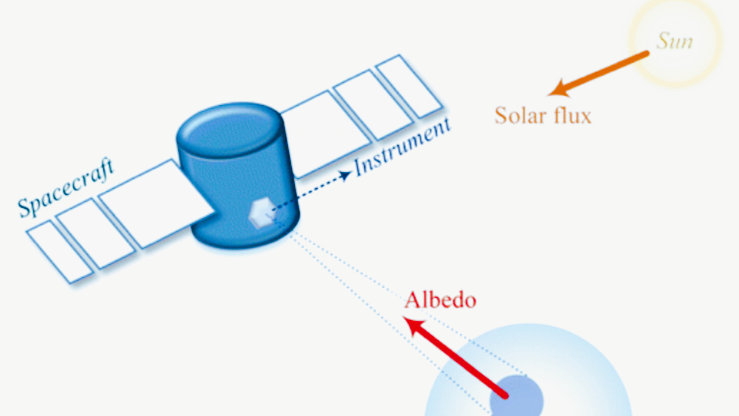
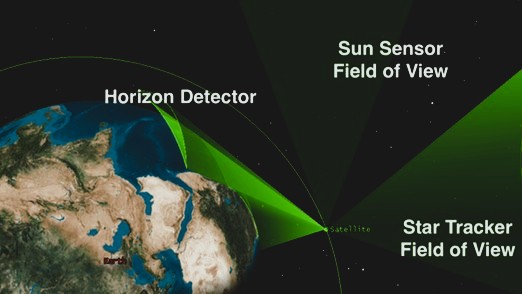
Modern star sensor deliver pointing accuracy that exceeds most other sensors. Engineers choose them as the primary solution for high-precision missions. Today, miniaturized versions power CubeSats and micro/nano-satellites widely.
Attitude control accuracy directly determines mission success.
High-resolution Earth observation satellites require sub-arcsecond pointing precision. Otherwise, images become blurry or geo-location fails.
Communication satellites must align antennas precisely toward ground stations.
Deep-space probes, located hundreds of millions of kilometers from Earth, rely entirely on star sensors for autonomous navigation.
Star sensor categories and typical applications
Large high-precision star sensors suit wide field-of-view, high sensitivity, and strong interference resistance. They serve space observatories, deep-space probes, and high-resolution satellites.
Medium commercial star sensors offer excellent cost-performance and high reliability. They support communication satellites, navigation satellites, and remote sensing satellites.
Micro/ultra-small star sensors provide tiny size and extremely low power consumption. They enable CubeSats, NanoSats, educational satellites, and formation flying missions.
Intelligent/multi-functional star sensors integrate AI and support debris monitoring. They target future mega-constellations and space situational awareness tasks.
Typical application examples
– High-resolution Earth imaging
– Low-orbit communication constellations
– Deep-space exploration
– Scientific missions
Key technical challenges of star sensors
Strong stray light creates interference.
Solutions include optimized baffle design, dynamic field-of-view selection, and intelligent frame discarding.
Space radiation causes single-event effects.
Solutions use radiation-hardened components, triple modular redundancy, EDAC error correction, and periodic refreshing.
Star catalog coverage and dynamic sky identification remain difficult.
Solutions adopt ultra-large star catalogs and deep-learning recognition algorithms.
Small satellite platforms face severe resource constraints.
Solutions integrate SoC designs, AI acceleration, and low-power algorithm optimization.
Send us a message,we will answer your email shortly!

TY-Space Technology (Beijing) Ltd. is professional focusing on advanced attitude optical sensors, especially Star Trackers for space industry.