
Star sensor have become essential core devices for satellites to achieve high-precision attitude determination and orbit control.
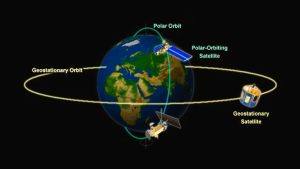
In polar orbits (with inclinations near 90°), especially sun-synchronous orbits (SSO), their importance stands out clearly. Sun-synchronous orbits typically operate at 600–800 km altitude. They maintain a nearly constant relative position to the Sun. This feature suits optical imaging, synthetic aperture radar (SAR), and infrared detection tasks that depend heavily on lighting conditions. Star sensors provide continuous, autonomous attitude measurements in these orbits. They operate independently of the Sun or Earth’s magnetic field. As a result, payloads always point accurately toward the Earth.
– They deliver extremely high pointing accuracy. Typical accuracy reaches 1–5 arcseconds, while top models achieve sub-arcsecond levels. This far exceeds the instability of sun sensors, earth sensors, and magnetometers in polar regions.
– They operate autonomously around the clock. They function without relying on the Sun, Earth, or ground beacons. Even during polar night or intense radiation, they still output stable attitude data.
– Modern event-based star sensors offer high update rates and low latency. They reach kHz-level output. This suits fast maneuvers and vibrating environments.
– New micro-miniature star sensors feature small size, low power, and light weight. Their mass has dropped below 1 kg. Power consumption stays under 5 W. These qualities fit CubeSats and small-to-medium polar satellites perfectly.
– They provide high reliability and long service life. Radiation hardening, thermal optimization, and redundancy design enable over 10 years of on-orbit operation.
High-energy particle radiation causes damage. Polar satellites frequently cross the Van Allen belts. Protons and heavy ions trigger single-event effects (SEE) and total ionizing dose (TID) in CCD/CMOS detectors and memory. These issues lead to star misidentification or permanent damage.
Stray light and aurora create strong interference. Near-polar regions produce intense sources like Earth albedo, auroral glow, and moonlight. These often blind the star sensor temporarily and cause loss of valid star points.
Thermal conditions change dramatically. Rapid entry and exit from Earth’s shadow produce temperature swings exceeding ±50°C. Such variations cause optical system deformation and focal length drift. Consequently, star positioning accuracy suffers.
Star catalog errors accumulate over time. During long missions, proper motion, parallax, and magnitude changes gradually degrade catalog accuracy. Regular on-orbit calibration or ground updates become necessary.
Low power and miniaturization create conflicts. Small satellites impose strict limits on power and volume. However, high-performance star sensors demand larger fields of view and faster processing chips. This design tension remains significant.
Send us a message,we will answer your email shortly!

TY-Space Technology (Beijing) Ltd. is professional focusing on advanced attitude optical sensors, especially Star Trackers for space industry.