
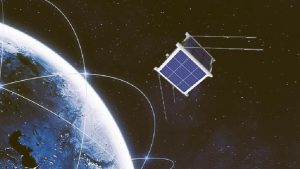
Picosatellites, also called pico satellites, usually refer to ultra-small satellites with a mass between 0.1 kg and 1 kg. People often use them in CubeSat standards, such as 1U or even smaller units. These satellites offer low cost, flexible launch options, and short development cycles. However, their strict SWaP limits (size, weight, and power) place very high demands on the Attitude Determination and Control Subsystem (ADCS).
Special Requirements of Picosatellites for Miniature Star Sensors
– Volume and Weight: Designers must keep dedicated picosatellite models under 50 g and smaller than 40 mm × 40 mm × 40 mm.
– Power Consumption: The typical value reaches 650 mW. Low-power design relies heavily on COTS components and efficient CMOS sensors.
– Accuracy and Update Rate: Attitude accuracy must exceed 30 arcseconds (3σ). The update rate needs to stay above 5 Hz to support agile imaging tasks.
– Environmental Adaptability: These sensors resist radiation up to 9 krad (Si). They operate from -20°C to +40°C. Engineers also add special baffles to prevent stray light interference from the Sun.
– Reliability: Sensors support Lost-in-Space mode and tracking mode. They include redundant designs to handle single-point failures.
Advantages, Challenges, and Solutions
Star sensors deliver clear advantages. They provide high accuracy at the arcsecond level, strong autonomy, low power consumption, and no need for external references. Unlike sun or Earth sensors, star sensors ignore lighting conditions and enable all-weather operation.
Star sensors also face several challenges. Space radiation may cause single-event upsets. Stray light interference requires optimized baffles. High-dynamic maneuvers can blur star spots, so advanced algorithms become necessary. Solutions include radiation-hardened COTS chips, integrated predictive tracking algorithms, and parallel calibration of multi-sensor installation matrices.
Basic Working Principle of Star Sensors
Star sensors (also known as Star Trackers) operate based on astronavigation technology. Their core process includes four main steps: image acquisition, star spot extraction, star pattern identification, and attitude calculation.
The sensor uses a CMOS or CCD image sensor to capture star-field images within its field of view. These images usually contain dozens to hundreds of stars with magnitudes from 1st to 6th.
Image processing algorithms, such as centroid extraction, accurately calculate the pixel coordinates and brightness of each star. They effectively avoid noise interference.
Star pattern identification algorithms then match the extracted star spots with the onboard star catalog, which typically stores thousands to millions of stars. Common methods include triangle algorithms or full-sky matching. These methods enable fast acquisition in Lost-in-Space mode.
Finally, the system uses the matching results and quaternion or Euler angle algorithms to compute the satellite’s attitude relative to the inertial coordinate system. It usually updates the output at 5 Hz or higher frequency.
Send us a message,we will answer your email shortly!

TY-Space Technology (Beijing) Ltd. is professional focusing on advanced attitude optical sensors, especially Star Trackers for space industry.