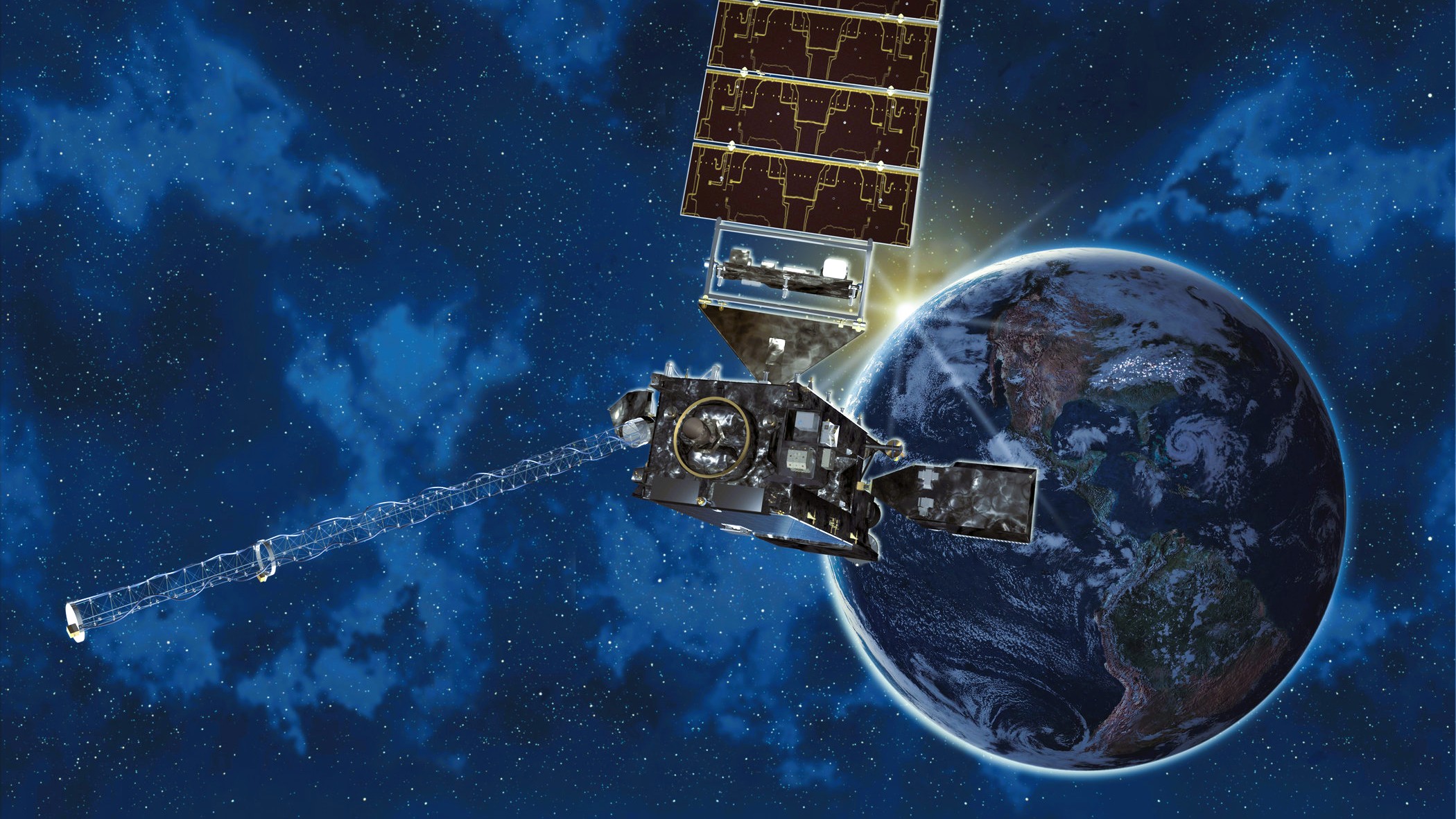

Radiationhardened star trackers specifically address extreme radiation environments. They use radiationresistant sensors, special shielding designs, and faulttolerant algorithms. Thus, they maintain subarcsecond accuracy even under radiation doses of several million rad (Si).
Core Technologies of Radiation Hardening
Radiationhardened star trackers achieve reliability through several key approaches:
RadiationResistant Image Sensors: Modern products widely adopt CMOS Active Pixel Sensors (APS). These sensors offer much stronger radiation tolerance than traditional CCDs.
Multiple Redundancy and Error Correction: Designers implement triple modular redundancy at the hardware level. They also apply realtime Error Detection and Correction (EDAC) in software. Therefore, singleevent effects never cause loss of attitude data.

Physical Shielding Design: Engineers use tantalum housings and spot shielding. As a result, they reduce radiation doses on critical chips to acceptable levels.
RadiationResistant Optical System: Manufacturers coat lenses with radiationresistant materials. This prevents discoloration or transmission loss from UV rays and charged particles. Consequently, longterm onorbit optical performance remains excellent.
Balance of Wide FieldofView and High Sensitivity: Mainstream products provide a 20°–30° field of view. They capture enough guide stars while keeping high angular resolution. Typical attitude measurement accuracy reaches 1–3 arcseconds (3σ).
Typical Application Scenarios
Radiationhardened star trackers have proven indispensable in many highvalue missions:
Deep Space Exploration: Missions must cross Jupiter’s intense radiation belts. Radiationhardened star trackers serve as the core of their attitude control systems.
HighRadiation NearEarth Orbits: Numerous Earth observation, communication, and military satellites operate in highdose regions. They rely on radiationhardened star trackers for longterm autonomous operation.
Solar Observation Missions: Solar probes face extreme solar particle events near the Sun. Radiationhardened star trackers ensure continuous attitude stability.
Small Satellites and CubeSats: New compact radiationhardened models weigh less than 2 kg and consume under 5 W. They now power CubeSats and small commercial constellations worldwide.
Send us a message,we will answer your email shortly!

TY-Space Technology (Beijing) Ltd. is professional focusing on advanced attitude optical sensors, especially Star Trackers for space industry.