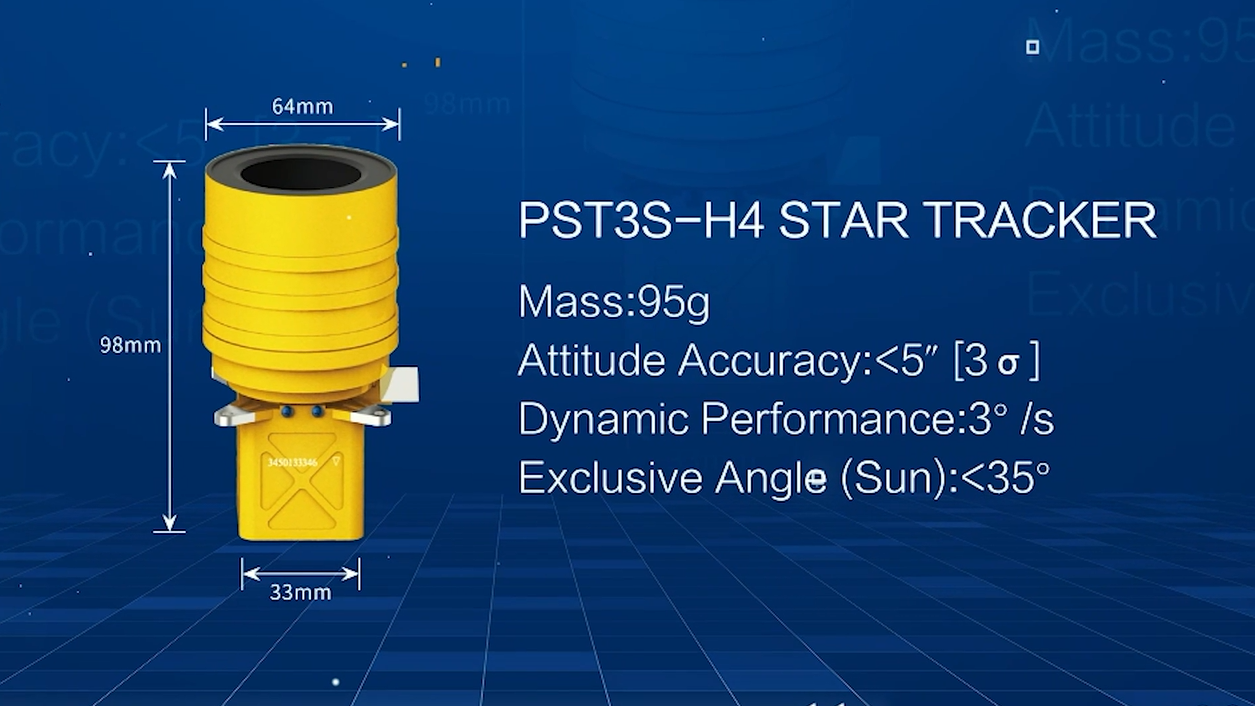

Radiation hardened star trackers resist cosmic radiation. They also provide precise attitude determination.
In space, particles from solar flares disrupt electronics. Cosmic rays and trapped radiation belts cause errors or total failure. Therefore, designers use special materials and designs. These mitigate effects. As a result, trackers deliver uninterrupted performance. They operate reliably in high radiation areas, such as geosynchronous or interplanetary orbits.

Space environments contain ionizing radiation. This poses serious threats to electronic components. Sources include cosmic rays, high energy particles, and solar energetic particles. For star trackers, radiation triggers several issues:
Single Event Upset (SEU): A particle flips bits in memory. This creates temporary faults. It can corrupt star data.
Total Ionizing Dose (TID) Effects: Cumulative exposure degrades semiconductors over time. It reduces sensitivity or increases noise.
Displacement Damage: Particles displace atoms in sensor lattices. This impairs image quality.
Radiation Hardening Methods
Designers often choose radiation tolerant image sensors at the core. For example, they select CMOS Active Pixel Sensors (APS). Unlike traditional CCDs, CMOS APS resists radiation induced noise better.
Engineers harden electronics with radiation tolerant components. They incorporate ASICs that include error correcting codes and redundant logic. Additionally, shielding uses materials like tantalum or special polymers. These block particles effectively.
Lenses and baffles employ radiation resistant glass. This prevents darkening or degradation. A wide field of view (FOV) captures multiple stars. Typically, it spans 2030 degrees. This improves accuracy. Advanced models integrate baffles. They reduce stray light from the Sun or Earth.
Software and Algorithms:Onboard software plays a critical role. It employs autonomous star identification algorithms. These recover from radiation induced errors.
Moreover, machine learning techniques filter noise. They also predict faults. Consequently, trackers maintain sub arcsecond accuracy.
Send us a message,we will answer your email shortly!

TY-Space Technology (Beijing) Ltd. is professional focusing on advanced attitude optical sensors, especially Star Trackers for space industry.