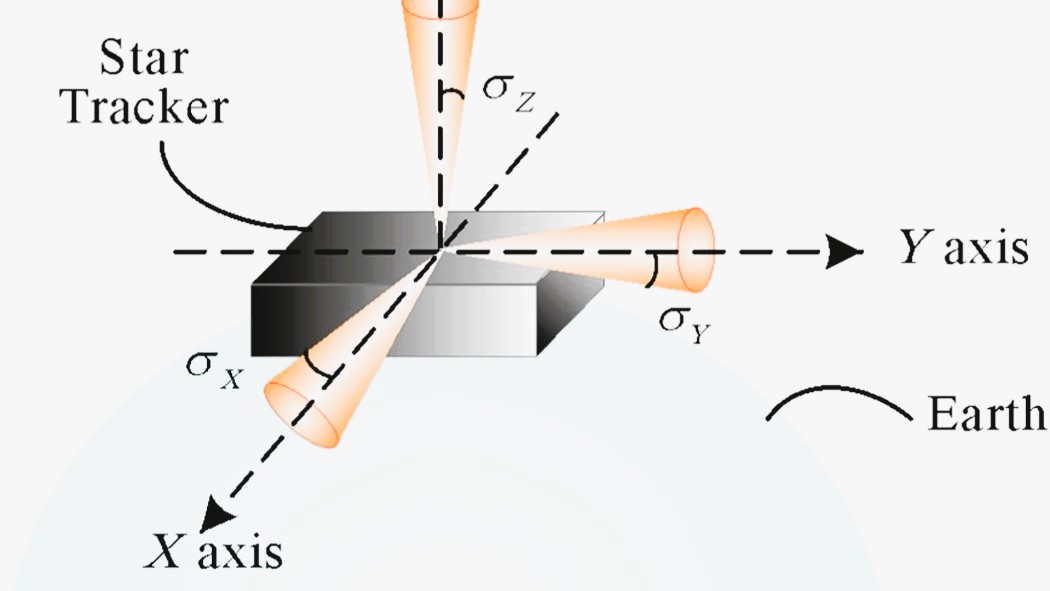

The rise of small satellite constellations and private space companies has dramatically increased demand for low-cost star tracker. These affordable products heavily use commercial off-the-shelf (COTS) components, simplified structures, and open-source algorithms, which greatly reduce manufacturing costs.
They offer friendly prices and easy availability. Entry-level models typically cost between $10,000 and $50,000. Therefore, universities, startups, and non-profit organizations can now join space projects and drive innovation across the industry.

Manufacturers design them small and power-efficient.
Many models weigh only 350–500 grams and consume less than 2 watts. This efficient design fits CubeSat platforms perfectly, extends battery life, reduces total satellite mass, and lowers launch costs.
They deliver high accuracy within budget limits.
Modern low-cost star trackers achieve arcsecond-level precision, matching high-end products. Optimized algorithms maintain stable performance even under stray-light interference and other challenging conditions.
Many units already prove their reliability in orbit.
Several affordable models have operated smoothly for years. They typically offer design lifetimes exceeding 5 years in LEO, pass radiation testing, and greatly reduce risk for new missions.
They adapt to multiple mission types.
These trackers work well from LEO constellations to deep-space exploration.
Some models even integrate attitude control functions, delivering one-stop solutions and simplifying overall satellite design.
Key Considerations When Purchasing Low-Cost Star Tracker
Price is only the starting point.
– Accuracy and update rate
Dynamic missions usually need 1–20 arcsecond accuracy. Highly agile satellites demand even higher update rates.
– Size, weight, and power (SWaP)
Small satellites are very sensitive to these parameters. SWaP directly affects launch vehicle compatibility.
– Radiation tolerance and lifetime
Confirm suitability for the target orbit. A minimum 5-year lifetime in LEO is the basic requirement.
– Integration ease
Prefer models with standard interfaces and flexible software. They connect smoothly to onboard computers and other sensors.
– In-orbit heritage
Choose products already flight-proven. Flight heritage significantly reduces mission risk.
– Budget versus performance trade-off
$10,000-class units suit simple missions well. Models above $50,000 provide more advanced features and better performance.
Send us a message,we will answer your email shortly!

TY-Space Technology (Beijing) Ltd. is professional focusing on advanced attitude optical sensors, especially Star Trackers for space industry.