
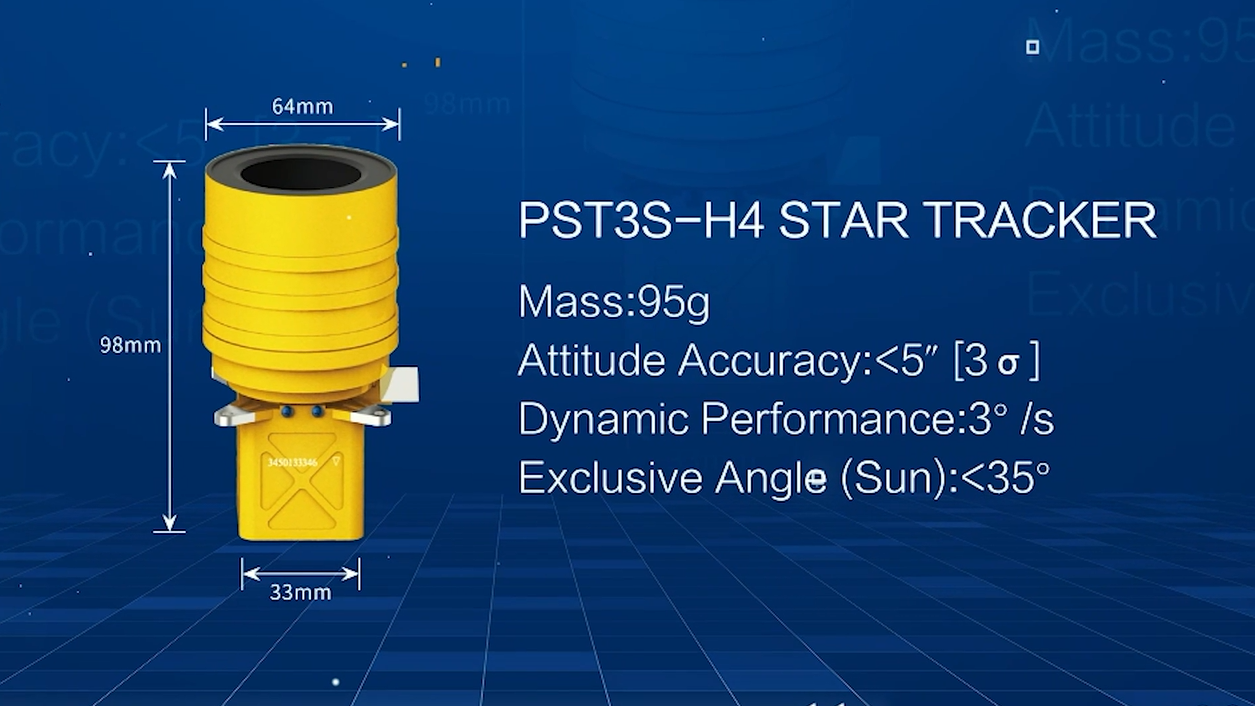
Space environments prove harsh, and power remains a limited resource. Satellites mainly rely on solar panels for power. Batteries supplement during eclipse periods or highdemand operations. Excessive star tracker power consumption depletes these resources. It shortens mission life, reduces payload capacity, or demands larger, heavier solar arrays. Consequently, launch costs increase.
For low Earth orbit (LEO) constellation satellites, efficient power management plays a critical role. Saving one watt in attitude determination systems translates into longer operation time or additional features. High power consumption generates heat. In vacuum environments, systems must dissipate this heat to prevent component failures. Therefore, thermal management adds complexity and weight.
Typical Power Consumption Levels of Star Trackers
Highend, fullsize star trackers: Designers use these for larger satellites, and they consume 210W.
Miniaturized star trackers (for small satellites): Modern CubeSat and nanosatellite designs typically operate between 0.5W and 2.5W.
Ultralow power options: Some advanced models consume less than 1W.
Factors Influencing Star Tracker Power Consumption
Tracker technology: CMOS trackers save more energy than CCDs. They achieve this through lower readout power and integrated processing.
Processing electronics: Onboard star catalogs and algorithms require computational power.
Operating modes: Star trackers often feature standby or lowpower modes.
Environmental factors: Extreme temperatures (typically 20°C to +40°C) demand heating elements, which increase power. Baffles and optical systems also affect efficiency. They reduce stray light processing needs.
Size and integration: Smaller models consume less power because they use fewer components.
Voltage supply: Efficient DCDC converters minimize waste. Models that support wide input ranges (such as 3.65V or 940V) better adapt to satellite buses.
Send us a message,we will answer your email shortly!

TY-Space Technology (Beijing) Ltd. is professional focusing on advanced attitude optical sensors, especially Star Trackers for space industry.